

O-Series Overview
The Backbone of Early U.S. Military Observation
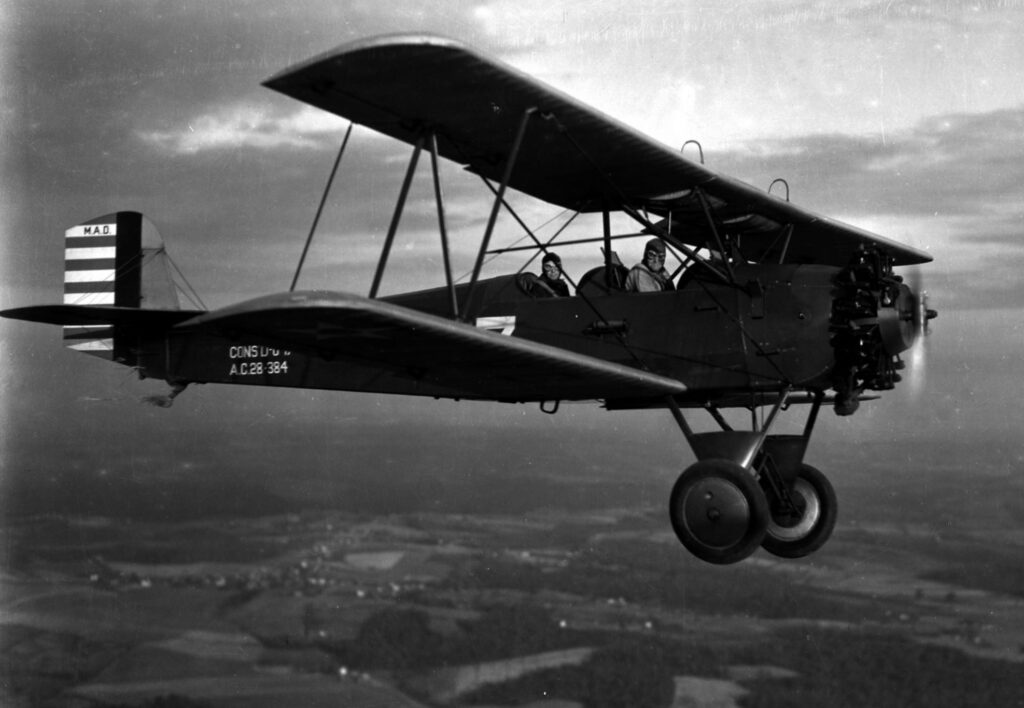
Before Consolidated became famous for flying boats and bombers, the company’s earliest lifeline came from a family of quiet, steady performers: the O-series observation planes. These aircraft were designed for watching the battlefield, mapping terrain, photographing targets, and reporting troop movements—a vital military role before radar and satellites changed reconnaissance forever.
The O-series represented a shift in American aviation thinking. Observation was no longer an afterthought—it became an organized discipline requiring reliable aircraft, stable flight behavior, and rugged construction. For Consolidated, these airplanes provided not only revenue but the engineering foundation that would shape the company’s identity.
The Thomas-Morse Connection
The story begins in 1930, when Reuben Fleet purchased the struggling Thomas-Morse Aircraft Company and absorbed its designs—including the O-19, the Army’s standard observation aircraft. Fleet didn’t buy the company simply to expand; he bought it because he understood that observation aircraft offered something far more valuable: consistent military contracts and a way to keep manufacturing lines open during uncertain times.
Dorothy Fleet recalls that Reuben transferred the entire operation to Buffalo, integrating Thomas-Morse engineers, tooling, and expertise directly into Consolidated’s workforce. This acquisition, though smaller in prestige than later ventures, was crucial. It gave Consolidated an immediate presence in Army observation programs and allowed the company to improve and modernize existing designs.
A Moment from the Archives
William Wagner records a striking truth:
In 1932, during the worst year of the Great Depression, only about a hundred airplanes were sold in the entire United States. Consolidated survived because the Army still needed O-series observation planes, and Fleet’s factory kept producing them. Those few orders—few but steady—quite literally kept the doors open when countless other aircraft companies were collapsing.
Without the O-series, Consolidated might not have endured long enough to build the PBY Catalina or the B-24 Liberator.
Characteristics of the O-Series
Observation aircraft needed:
-
slow, stable flight for accurate viewing
-
durable frames capable of rough-field operation
-
tandem cockpits with room for maps and cameras
-
excellent low-speed control
-
steady behavior in turbulence
-
simplicity and reliability for long patrol hours
These qualities defined the O-series and deeply influenced Consolidated’s later engineering philosophy.
The O-Series Legacy
As technology advanced, observation aircraft evolved into more specialized roles—photographic reconnaissance, artillery spotting, mapping, and eventually maritime patrol. The lessons learned from the O-series fed directly into the company’s later triumphs:
-
the endurance and stability of the P2Y Ranger
-
the extended patrol reach of the PBY Catalina
-
the long-range reconnaissance capacity of the B-24 Liberator
-
the maritime focus of the PB4Y-2 Privateer
What began as slow, sturdy biplanes eventually shaped the most famous long-range patrol and bomber aircraft of World War II.
Note on Observation Aircraft Classification
By the mid-1930s, the U.S. Army Air Corps began phasing out the formal “Observation” category.
Advances in aviation and changing military doctrine caused observation work to be absorbed into new mission types such as reconnaissance, patrol, photographic mapping, and later maritime patrol and patrol bombers.
Because of this shift, Consolidated did not produce a later generation of “O-series” observation aircraft.
Instead, the company’s reconnaissance work evolved directly into aircraft like the P2Y Ranger, PBY Catalina, and long-range variants of the B-24 Liberator—all of which fulfilled what had once been the observation role.
Explore the O-Series
-
O-19
-
Experimental
-
Recon Development