

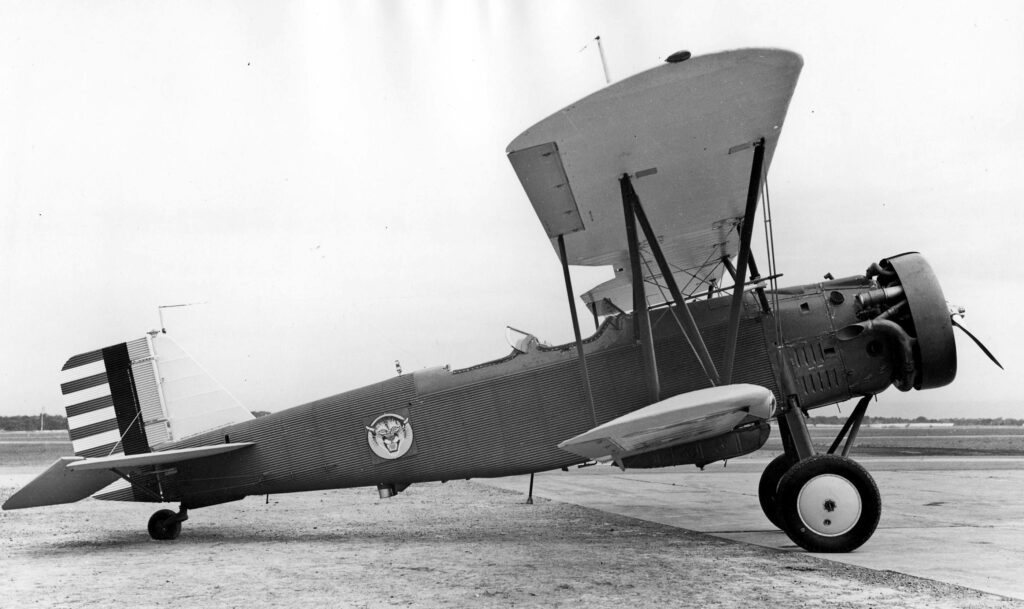
O-19
The Observation Aircraft That Carried Consolidated Through Its Hardest Years
The O-19 stands as one of the most important aircraft in Consolidated’s early history—not because it was famous, but because it kept the company alive. Originally a Thomas-Morse design, the O-19 became a Consolidated aircraft when Reuben Fleet purchased Thomas-Morse Aircraft in 1930 and absorbed its manufacturing expertise, tooling, and contracts.
The O-19 was rugged, stable, and dependable—qualities essential for observation missions. It served the U.S. Army Air Corps at a time when accurate mapping, artillery spotting, and aerial photography were central to military planning.
A Strategic Acquisition
Dorothy Fleet describes how Reuben Fleet bought Thomas-Morse not for glory, but for survival. Consolidated needed Army contracts, and the O-19 program provided exactly that. After the acquisition, Fleet moved the operation to Buffalo and brought the Thomas-Morse engineers into the Consolidated workforce, strengthening the company’s technical foundation.
Wagner reinforces how this decision became pivotal: during the economic crisis of 1932, only about one hundred airplanes were sold in the entire United States, yet Consolidated’s O-19 contracts continued to trickle in, keeping the production line open and the company solvent.
Without the O-19, Consolidated might have disappeared before ever designing the PBY Catalina or the B-24 Liberator.
What Made the O-19 Successful
The O-19 fulfilled the Army’s needs for a versatile, stable observation platform. Its strengths included:
-
a tough, fabric-covered biplane structure capable of rough-field operations
-
forgiving low-speed handling ideal for reconnaissance and photography
-
a tandem cockpit arrangement with excellent visibility
-
straightforward maintenance and field repair
-
reliable performance in varied weather and terrain
It wasn’t fast. It wasn’t glamorous. It wasn’t meant to win air races.
But commanders trusted it—and pilots respected it.
A Human Moment: Fleet’s Quiet Pride
Though not widely advertised, Reuben Fleet was proud of how the O-19 performed. According to family accounts, he often pointed out that pilots who trained or flew observation missions in the O-19 spoke highly of its predictable handling. For Fleet, this meant everything—the aircraft did its job, protected its crews, and brought back information without fuss or failure.
In a decade when aviation companies rose and fell almost overnight, the O-19’s reliability gave Consolidated something priceless: breathing room.
The O-19’s Role in Aviation Development
The experience Consolidated gained from building and refining the O-19 influenced several later aircraft programs:
-
improved stability and control systems
-
stronger airframes for long-duration missions
-
better cockpit ergonomics for visibility and mapping work
-
techniques that eventually helped shape the P2Y and PBY
-
insights into long-range patrol requirements
The O-19 was a stepping stone—not glamorous, not famous, but essential.
Legacy
Today, the O-19 is rarely discussed outside aviation circles, yet its impact was profound. It represents the bridge between Consolidated’s fragile early years and the company’s later triumphs.
It is no exaggeration to say that this modest biplane helped safeguard the future of one of the most important aircraft manufacturers of the 20th century.
Explore More Observation History
-
O-Series Overview
-
Experimental
-
Recon Development