

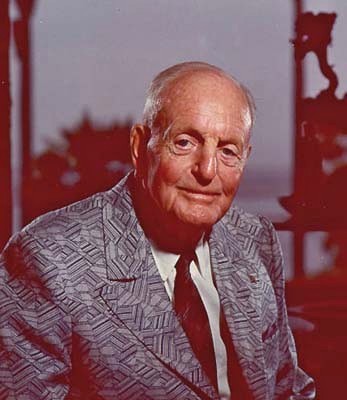
Reuben H. Fleet
Aviation Pioneer. Visionary Builder. Founder of Consolidated Aircraft.
Reuben Hollis Fleet helped shape the destiny of American aviation. He was a military officer, engineer, industrial leader, and the architect behind some of the most influential aircraft of the 20th century. His legacy is more than a biography. It is the story of how one man’s vision helped lift humanity into the age of flight.
To everyone who worked under him, he was simply “The Major” — a leader whose standards were fierce because he had watched too many pilots die in machines that should have protected them.
This page honors his life, his work, and the pioneering spirit he carried from the open fields of Washington State to the factories and flight lines that defined a century.
Early Life: The Making of a Pioneer
Reuben H. Fleet was born on March 6, 1887, in Washington State. The frontier landscapes of his childhood shaped him with a sense of possibility and determination. Before becoming an aviation leader, he served as a schoolteacher and an officer in the National Guard, where he discovered a passion for engineering and leadership.
He entered military aviation as the world was still learning what airplanes could do. Trained under the Army Signal Corps, he flew when aircraft were fragile frames of wood and fabric, and when every landing required both skill and courage. Fleet belonged to aviation before it had rules—and helped define them.
Launching America’s First Airmail
On May 15, 1918, Captain Reuben H. Fleet oversaw and personally flew the first official U.S. airmail route between Washington, D.C., and New York. The event marked a turning point in American history: aviation was no longer an experiment but a national infrastructure.
Fleet understood that the airplane would not simply change how people traveled—it would change how the world connected. His role in launching airmail proved that flight could serve practical, everyday needs and not merely military or scientific goals.
The Birth of Consolidated Aircraft
After leaving the Army, Fleet founded Consolidated Aircraft Corporation in 1923. What began as a modest manufacturer soon became an industry leader known for innovation, technical excellence, and engineering discipline.
Under Fleet’s leadership, Consolidated developed:
-
training aircraft used nationwide
-
long-range patrol planes
-
transport aircraft that expanded commercial possibilities
-
the flying boats that made transoceanic flight real
-
the bombers that helped end World War II
Fleet combined engineering insight with a deep sense of responsibility for the crews who would depend on these machines. To him, aircraft were not just products—they were life-preserving tools that had to perform under the most demanding conditions.
Moving to San Diego: Building an Aviation Capital
In 1935, Fleet moved Consolidated Aircraft from Buffalo, New York, to San Diego. This decision transformed the region into a world center of aviation and eventually space exploration. The massive plant built along the waterfront produced aircraft that would change both the war and the city itself.
From this facility came three of Consolidated’s most iconic designs:
-
the PBY Catalina
-
the B-24 Liberator
-
the PB4Y-2 Privateer
San Diego’s identity as an aerospace hub traces directly back to Fleet’s vision, leadership, and belief that the West Coast would become an epicenter of American industry.
Aircraft That Carried a War
During World War II, aircraft built under Fleet’s leadership served in every major theater. These machines became essential tools for victory.
B-24 Liberator
The most produced American military aircraft in history, the B-24 was fast, long-range, and capable of carrying heavy payloads. It played a decisive role in strategic bombing and anti-submarine missions.
PBY Catalina
A versatile flying boat that patrolled oceans, hunted submarines, and rescued downed airmen. It became one of the most iconic and beloved aircraft of the war.
PB4Y-2 Privateer
A long-range patrol bomber that escorted convoys and performed crucial reconnaissance missions.
Fleet’s factories produced aircraft not only in extraordinary numbers but with extraordinary purpose, meeting the demands of a global conflict with innovation and precision.
Leadership, Discipline, and Vision
Reuben H. Fleet was known for uncompromising standards. He expected excellence from his engineers and workers because he knew lives depended on it. His leadership blended military discipline with a genuine concern for the people who built and flew his aircraft.
Fleet’s approach to design and production helped define modern aerospace manufacturing.
He believed that aviation was more than an industry—it was a responsibility.
Legacy
Reuben H. Fleet’s influence continues long after his retirement and passing. His legacy includes:
-
the aircraft that shaped World War II
-
the aviation industry that flourished in San Diego
-
the generations of pilots trained on his designs
-
the Reuben H. Fleet Science Center in Balboa Park
-
the historical archives, photographs, and stories preserved today
His life helped define the 20th century’s most transformative technological era.
Explore His Legacy
Biography
A deeper look into the life and character of Reuben H. Fleet.
Consolidated Aircraft
The innovations, factories, and aircraft that shaped aviation history.