

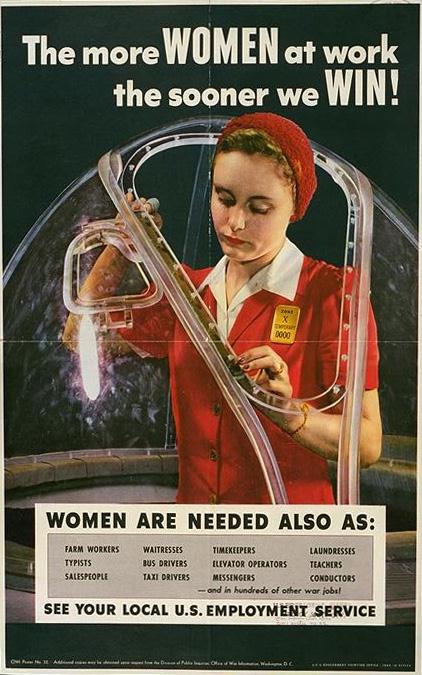
Women at Consolidated — The Wartime Workforce
The Women Who Helped Build America’s Arsenal of Democracy
During World War II, Consolidated Aircraft—like every major U.S. manufacturer—faced an enormous challenge: a rapidly expanding workload and a shrinking pool of available male laborers due to military enlistment. The solution came from a new and transformative force in American industry: women workers, who stepped into roles once thought impossible for them.
In San Diego, Fort Worth, and other Consolidated sites, thousands of women became machinists, riveters, welders, inspectors, draftsmen, technicians, and assembly-line specialists. Their presence reshaped the company, the city, and the future of American labor.
A Historic Shift in the Workforce
Before the war, aviation production was almost entirely male. By 1943–44:
-
nearly one-third of Consolidated’s workforce consisted of women
-
entire production lines were staffed and supervised by women
-
women held roles ranging from heavy riveting to precision instrumentation
-
women took leadership positions in training and inspection units
This change was not symbolic—it was structural. The Liberator would not have existed in its wartime numbers without female labor.
From the Household to the Factory Floor
Many women who joined Consolidated had never used industrial tools before. Training centers inside the factories and at local community facilities taught:
-
riveting and drilling techniques
-
machining fundamentals
-
welding and sheet-metal work
-
blueprint reading
-
hydraulic, fuel, and electrical system assembly
-
aircraft inspection standards
These programs were fast, rigorous, and essential to meeting production demands. Women mastered tasks once assumed to be “men’s work,” often outperforming expectations.
Life on the Line
Historical accounts and family recollections describe the everyday reality:
-
mothers working swing shifts while fathers served overseas
-
women commuting in groups during blackout restrictions
-
break rooms filled with laughter, exhaustion, and stories of news from the front
-
precision teams of female riveters who developed their own rhythmic techniques
-
friendships formed across backgrounds, cultures, and ages
The factory—noisy, bright, relentless—became a shared world of purpose.
Quality Above All
Women gained a strong reputation for precision and consistency. During the peak of B-24 production:
-
women dominated inspection teams
-
female technicians performed detailed control-surface fitting
-
women often handled the most delicate wiring and instrumentation tasks
Supervisors documented lower error rates in some female-staffed departments, a quiet but powerful testament to their skill.
Changing American Society
The transformation at Consolidated echoed a nationwide shift:
-
women earned wages far above prewar norms
-
they gained technical experience that would influence postwar industries
-
many joined unions and helped shape workplace policies
-
their work challenged—and permanently altered—traditional ideas about gender roles
Although many women left the factories after the war, the cultural shift remained.
Aerospace, engineering, and manufacturing would never be the same.
A Legacy That Endures
The aircraft built by these women—especially the thousands of B-24 Liberators—flew over every theatre of WWII. Their contributions were not just mechanical; they were moral. They carried the belief that their work mattered, that it helped bring loved ones home, and that it served something larger than individual lives.
Today, their story remains one of the most inspiring chapters in America’s industrial history.
The women of Consolidated didn’t just build airplanes.
They helped win the war.