

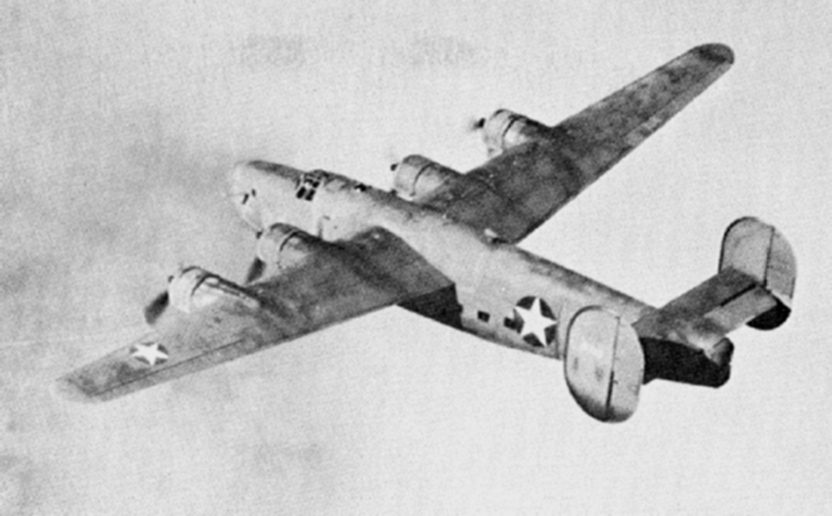
C-87 Liberator Express
The Long-Range Workhorse Built From a Bomber
The C-87 Liberator Express was one of the most important transport aircraft of World War II—a long-range, high-payload hauler adapted directly from Consolidated’s B-24 heavy bomber. Built to move people, cargo, and high-value materials across oceans, the C-87 served in nearly every major theater and became the backbone of several critical wartime transport routes.
Fast, far-flying, and capable of carrying substantial loads, the C-87 demonstrated how a bomber’s powerful airframe could be transformed into an indispensable logistical machine.
From Bomber to Transport
The B-24 Liberator’s distinctive high-aspect-ratio Davis wing, large internal volume, and long-range performance made it an ideal foundation for a transport aircraft. The U.S. Army Air Forces urgently needed a fast, heavy-lift airplane that could fly over vast oceans to resupply far-flung bases.
Consolidated removed the B-24’s armament, installed a new cargo floor, modified the fuselage for loading access, and redesigned the interior for passengers or freight. The result was the C-87 Liberator Express—one of the earliest examples of a bomber converted into a strategic transport.
Missions and Global Importance
The C-87 proved vital in roles such as:
-
long-range cargo delivery
-
personnel and VIP transport
-
carrying spare parts, fuel components, and electronics
-
supporting intelligence and diplomatic missions
-
flying across the Atlantic and Pacific supply routes
-
navigating the dangerous “Hump” route over the Himalayas
Because the aircraft could fly higher and farther than many other transports of the time, it opened routes previously considered impractical or impossible.
Performance Characteristics
The C-87’s performance stood out among early WWII transports:
-
long range suitable for intercontinental flights
-
a useful payload capacity derived from the B-24’s bomb-carrying strength
-
high cruise speed compared to other transports
-
strong, durable airframe built for demanding operations
Its speed made it a favorite for high-priority missions. Commanders often used the C-87 when something absolutely had to arrive on time.
Challenges and Crew Experience
Like all converted aircraft, the C-87 had quirks. Pilots noted:
-
demanding handling characteristics inherited from the B-24
-
sensitivity to weight distribution
-
a somewhat austere and noisy interior
-
the need for experienced flight crews on long-range missions
Despite these challenges, crews respected the C-87 for its reliability and mission effectiveness.
The C-87’s Role in Aviation Evolution
The C-87 proved what Consolidated engineers had long believed: a well-designed airframe could serve multiple roles with minimal redesign. Lessons from the C-87 directly influenced later transport aircraft and demonstrated the flexibility of modular design principles.
Its contributions during WWII helped shape future ideas about global mobility, strategic lift, and multi-mission aircraft design.
Legacy
While overshadowed in public memory by the B-24 bomber, the C-87 Liberator Express remains one of Consolidated’s most significant wartime transports. It carried diplomats, generals, cargo, mail, and life-saving supplies across thousands of miles—quietly enabling the operations that made victory possible.
The C-87 stands today as a testament to ingenuity under pressure and to the adaptability of the Liberator airframe.