
Training Aircraft
Foundations of Flight
Before pilots could take on the demands of combat, long-range patrol, or transport missions, they first needed to master the fundamentals of flight. Consolidated Aircraft played a vital role in this early stage of aviation training by producing reliable, forgiving aircraft designed to turn beginners into confident aviators.
Training aircraft had a simple but essential mission:
teach pilots to fly safely, correctly, and consistently—while preparing them for the more advanced aircraft they would later command.
Consolidated’s trainers were engineered with stability, strength, and predictability in mind. They introduced early aviators to the feel of the controls, the shifting weight of the aircraft in flight, and the discipline required to operate safely under varying conditions.
These designs became the stepping stones that carried thousands of pilots into the skies.
Purpose and Design Philosophy
Training aircraft were not built for speed or combat.
They were built for trust.
A student pilot needed an aircraft that could:
-
respond smoothly to inputs
-
recover predictably from errors
-
withstand mistakes during hard landings
-
offer clear visibility for both student and instructor
-
remain stable in level flight
Consolidated trainers embodied these qualities. Their construction emphasized durability and simplicity, ensuring that pilots learned the fundamentals without being overwhelmed by complexity.
The company’s approach to training aircraft mirrored Fleet’s larger philosophy: the first responsibility of an aircraft is to protect those who fly it.
The PT-1 “Trusty”
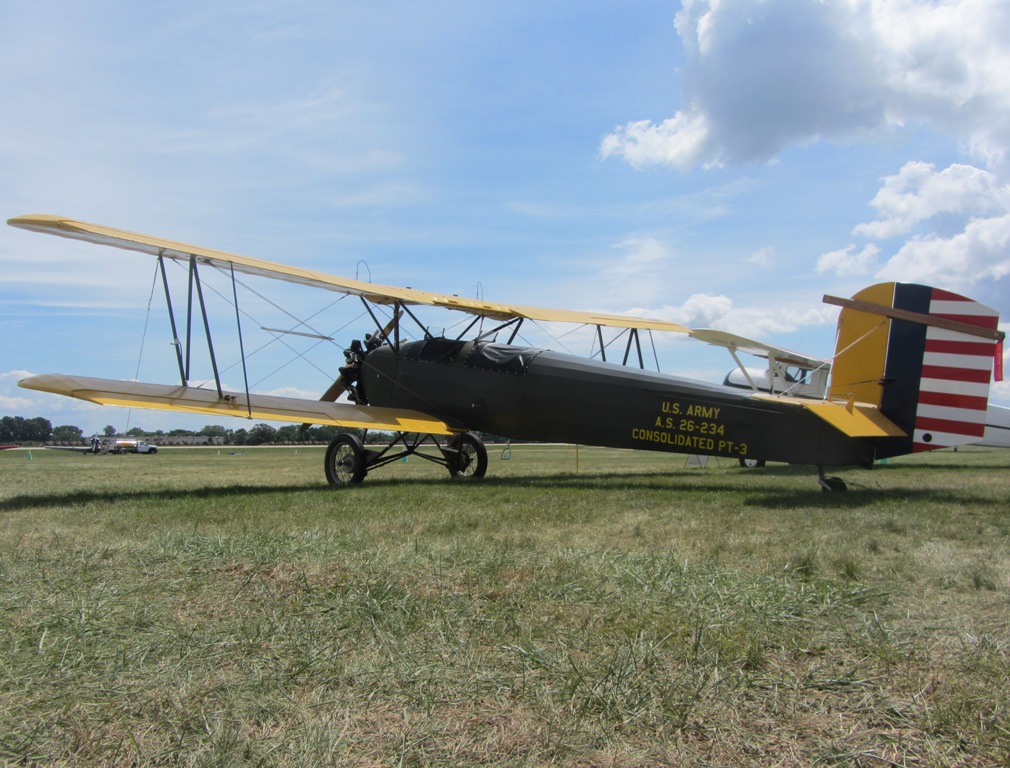
One of Consolidated Aircraft’s earliest and most important training designs was the PT-1 “Trusty.” Introduced in the 1920s, it became a widely used primary trainer for the U.S. Army Air Service.
The PT-1 was notable for:
-
its strong welded steel-tube fuselage
-
fabric-covered wings and control surfaces
-
open cockpit with tandem seating
-
forgiving flight characteristics
Pilots praised the PT-1 for its stability and dependable handling. It allowed new aviators to practice takeoffs, landings, turns, stalls, and emergency procedures with a high degree of safety. In many ways, the PT-1 set the standard for American training aircraft for the next decade.
Thousands of pilots received their first instruction in aircraft like the Trusty, making it one of Consolidated’s foundational contributions to military aviation.
(Insert photo of PT-1 here)
Legacy of Training Aircraft
Though training aircraft may not receive the same level of recognition as bombers or flying boats, their impact is arguably just as important. Every combat pilot, patrol pilot, or transport pilot began in a trainer—often one built by Consolidated.
These aircraft shaped the skills, confidence, and discipline of the aviators who would later fly missions across the world. Their reliability and simplicity helped save countless lives during training and ensured that pilots entered the cockpit of wartime aircraft prepared and capable.
The story of Consolidated Aircraft begins with its trainers. They were the first chapter in a legacy of innovation and excellence that would come to define the company.
Explore More Aircraft
Return to the Hangar to view other categories:
-
Observation Aircraft
-
Transport Aircraft
-
Pursuit Aircraft
-
Seaplanes & Flying Boats
-
Bombers