

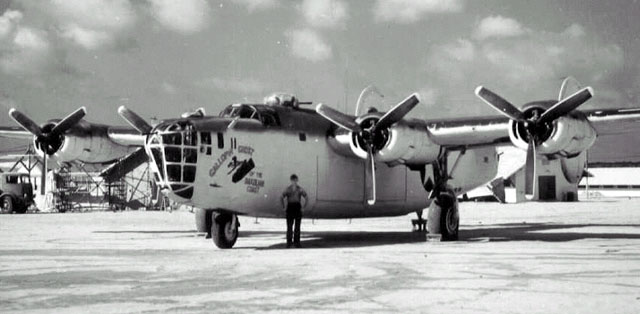
PB4Y-1 Naval Liberators
The Liberator at Sea
As the demands of naval warfare expanded across the world’s oceans, the U.S. Navy adapted the B-24 Liberator into a long-range maritime patrol aircraft capable of operating far from land. In naval service, the Liberator became the PB4Y, an aircraft designed to hunt submarines, protect convoys, and maintain surveillance over vast stretches of open water.
The PB4Y represents the transformation of a strategic bomber into a naval sentinel—one whose endurance and reach made it indispensable in the fight for control of the seas.
From Bomber to Maritime Patrol
The Liberator’s long range and high endurance made it well suited for maritime operations. Naval modifications focused on adapting the aircraft to prolonged patrols over water rather than high-altitude bombing missions.
Key changes included:
-
equipment optimized for ocean surveillance
-
adaptations for anti-submarine warfare
-
revised mission profiles emphasizing endurance over payload
These changes allowed the PB4Y to operate where few other aircraft could remain on station for extended periods.
Closing the Ocean Gaps
One of the most critical challenges early in the war was the existence of vast ocean areas beyond the reach of land-based aircraft. These gaps allowed enemy submarines to operate with relative freedom.
PB4Y aircraft helped close these gaps by:
-
patrolling convoy routes
-
detecting and tracking submarines
-
coordinating with surface escorts
-
denying submarines safe operating zones
Their presence forced submarines to remain submerged longer, reducing effectiveness even when no direct attack occurred.
PB4Y-1
The Navalized Liberator
The PB4Y-1 was the Navy’s first Liberator-based patrol aircraft. It retained much of the B-24’s structure while incorporating naval equipment and mission-specific modifications.
PB4Y-1 aircraft served in:
-
anti-submarine warfare
-
long-range reconnaissance
-
convoy protection
They operated across multiple theaters, including the Atlantic and Pacific, and became a cornerstone of naval patrol aviation during the middle years of the war.
Toward a Dedicated Naval Aircraft
Experience with the PB4Y-1 revealed both the strengths and limitations of adapting a bomber for maritime patrol. While highly effective, naval operations demanded further specialization—leading directly to the development of a more heavily modified successor.
That evolution would culminate in the PB4Y-2 Privateer, a purpose-built maritime patrol aircraft that carried the Liberator lineage forward while addressing the specific needs of naval warfare.
Endurance as a Weapon
Unlike bombers tasked with short windows over targets, PB4Y crews often spent many hours scanning the ocean below, maintaining vigilance under monotonous and exhausting conditions.
In this role, endurance became a weapon:
-
long patrols denied enemy movement
-
persistent observation reduced surprise
-
presence alone altered enemy behavior
The PB4Y demonstrated that control of the air above the sea was essential to winning the naval war.
A Naval Legacy
The PB4Y Naval Liberators played a decisive role in securing Allied sea lanes and protecting the flow of men and material across the oceans. They bridged the gap between bomber and patrol aircraft, proving that adaptability and endurance could be just as powerful as firepower.
Their success laid the groundwork for postwar maritime patrol aviation and established a lasting naval chapter in the Liberator’s history.
Continue Exploring Naval Liberators
-
PB4Y-1 Naval Liberator
-
PB4Y-2 Privateer
-
Bomber Strategies
-
WWII Aircrew Survival & Training