

 Commercial Aircraft
Consolidated’s Vision for Civil Aviation
Consolidated Aircraft is best known for its military designs, but the company also played a meaningful role in shaping early commercial aviation. During the 1920s and 1930s—when air travel was still maturing—Consolidated sought to bring its engineering standards into the civilian market, offering aircraft that were reliable, efficient, and designed for the needs of business travelers, regional airlines, and mail carriers.
For Reuben H. Fleet, civil aviation was not a side project. It was part of a larger mission:
to make flying practical, dependable, and accessible for both military and civilian operators.
The aircraft developed during this period helped demonstrate that Consolidated’s design philosophy—strength, stability, and simplicity—could serve more than wartime demands.
The Role of Commercial Aviation in Fleet’s Vision
Fleet saw commercial aviation as an essential part of America’s future transportation network. His designs emphasized:
-
dependable performance in varied conditions
-
streamlined construction for easier maintenance
-
comfortable, enclosed cabins suited for passengers
-
efficient engines for longer commercial routes
-
multipurpose interiors for mail and cargo
These aircraft helped bridge the gap between early “air coaches” and the more sophisticated transports that would follow in the jet age.
Consolidated’s Commercial Design Philosophy
Even in its civilian aircraft, Consolidated remained committed to the principles that defined its military successes:
-
structural strength and rugged durability
-
balance and stability derived from Fleet’s safety innovations
-
clean aerodynamic lines to improve range and fuel economy
-
functional interiors adaptable to multiple roles
This approach produced commercial aircraft that airlines trusted—even when passenger aviation was still young and unpredictable.
Notable Commercial Aircraft
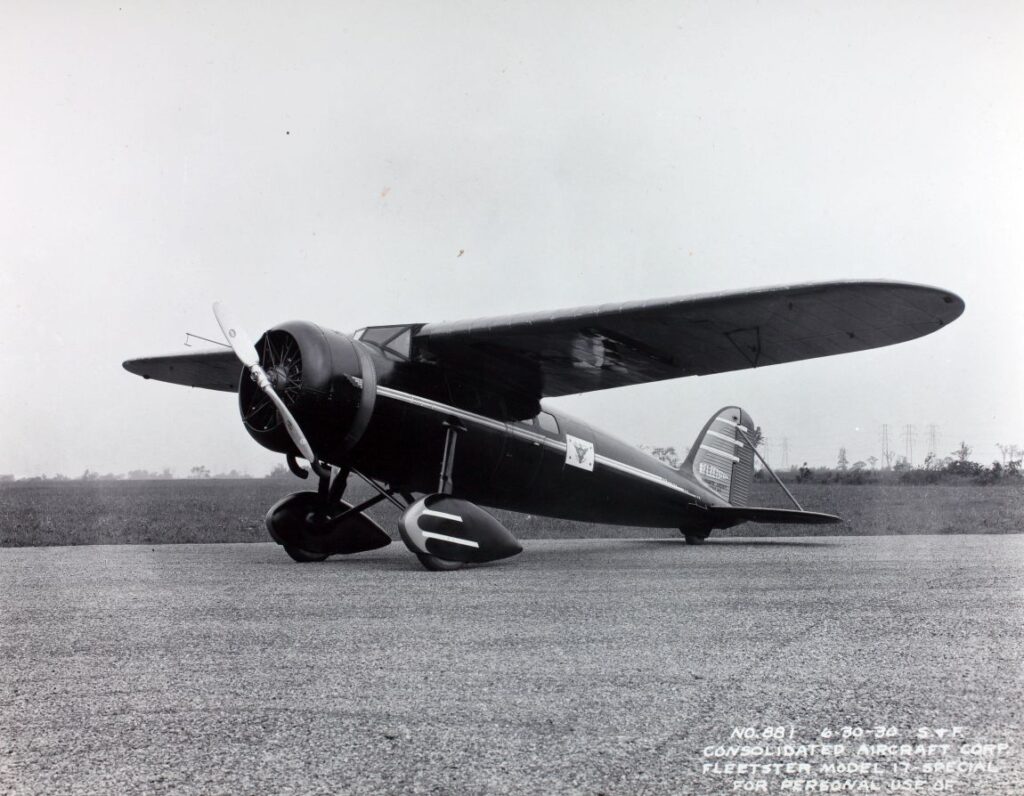
The Fleetster (Model 17) stands as the flagship of Consolidated’s civilian designs. Stylish, economical, and practical, it showcased the company’s ability to build beyond its military contracts. Additional commercial variants and prototypes followed, each expanding Consolidated’s understanding of the civilian market and influencing later transport and utility aircraft.
Visit the following aircraft pages to learn more:
-
Fleetster (Model 17 & Variants)
-
Additional commercial models may be added as this archive expands.
Commercial Aviation’s Legacy Within Consolidated
While Consolidated’s wartime aircraft received the most attention, its commercial designs quietly shaped the company’s engineering approach. They helped:
-
refine aerodynamic techniques
-
influence transport and cargo designs
-
strengthen relationships with airlines
-
prepare the company for postwar civilian markets
Today, these aircraft reveal another side of Reuben H. Fleet’s legacy—his belief that aviation was not merely a military tool, but a new frontier for everyday people.
Explore More Aircraft
Return to the Hangar to continue exploring:
-
Training Aircraft
-
Observation Aircraft
-
Pursuit Aircraft
-
Transport Aircraft
-
Seaplanes & Flying Boats
-
Bombers
-
Commercial Aircraft