

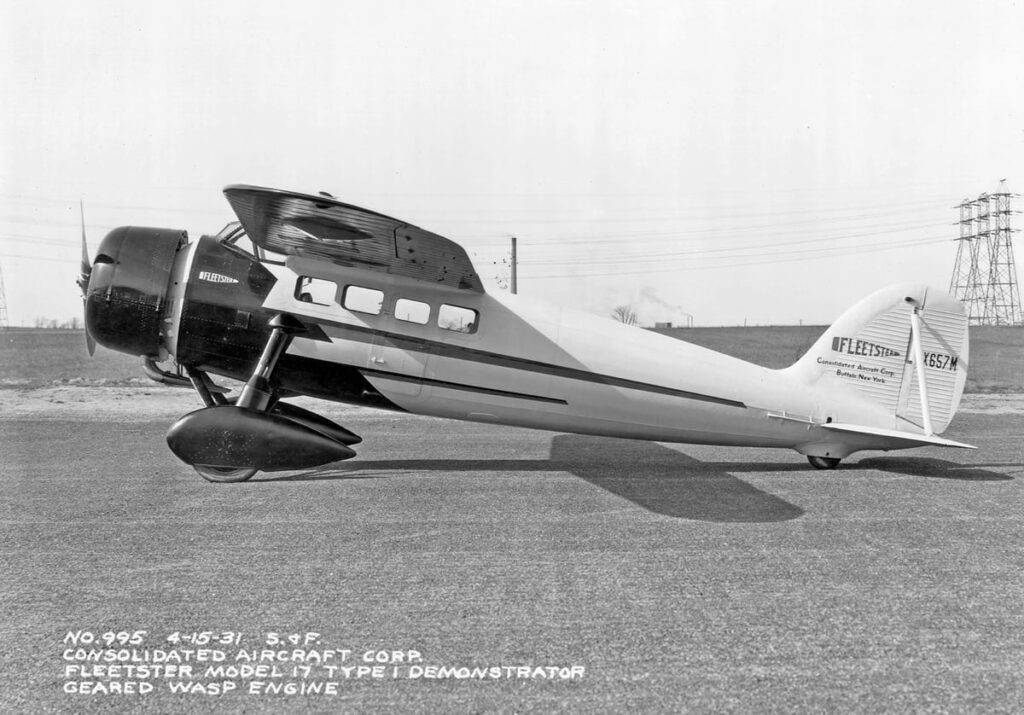
Fleetster (Model 17) & Variants
A Streamlined Vision for Modern Commercial Aviation
The Consolidated Fleetster — designated Model 17 — emerged at a pivotal moment in aviation, when commercial air travel was shifting from rugged, utilitarian craft to sleek, comfortable, business-oriented aircraft. Designed under the guidance of Reuben H. Fleet, the Fleetster represented Consolidated Aircraft’s bold entry into the premium transport market, offering speed, efficiency, and modern aesthetics that stood apart from its contemporaries.
Introduced in the early 1930s, the Fleetster became one of Consolidated’s most recognizable civilian designs, serving airlines, private executives, and government agencies. It also marked a technological and stylistic transition, blending the practicality of earlier high-wing transports with forward-looking aerodynamic refinement.
Design Philosophy & Purpose
The Fleetster was conceived as a versatile commercial platform that could be adapted for:
-
passenger service
-
executive and corporate transport
-
air mail routes
-
cargo operations
-
mixed-use civil and government contracts
Its key characteristics included:
-
streamlined aluminum monocoque fuselage
-
a high-wing cantilever design for stability and visibility
-
improved passenger comfort
-
easy maintenance and loading options
-
reliable, high-performance radial engines
At a time when many civil aircraft remained fabric-covered or structurally simple, the Fleetster stood out as innovative, modern, and commercially attractive.
Production & Legacy
Though produced in limited numbers, the Fleetster family left a lasting impact by:
-
proving the viability of premium executive aircraft
-
influencing later commercial transports
-
strengthening Consolidated’s presence in civil aviation
-
serving high-profile customers and specialized operations
It also showcased the company’s ability to pivot between military and commercial markets — a versatility that defined Consolidated Aircraft’s broader legacy.
Fleetster Variants (Model 17 Family)
Below are all commonly recognized Fleetster variants, clarified and organized into a coherent family structure.
Fleetster 17-1
Baseline Passenger / Utility Variant
The 17-1 was the fundamental Fleetster configuration, offering:
-
seating for several passengers
-
a dependable radial engine (typically Pratt & Whitney powerplants)
-
high-wing stability suited for short and medium-range commercial routes
It established the core airframe that all later variants expanded upon.
Fleetster 17-2
Improved Transport Version
The 17-2 refined the original design with:
-
upgraded load-carrying capability
-
minor aerodynamic modifications
-
improved cabin features for commercial operators
This version found use with air transport companies seeking economical, reliable service aircraft.
Fleetster 17-3
Mail & Cargo Configuration
The 17-3 introduced structural adjustments to support:
-
dedicated mail carriage
-
mixed cargo/passenger missions
-
rapid reconfiguration of the interior
It became a favored platform for early U.S. air mail operators and regional carriers.
Fleetster 17R
Retractable-Gear Aerodynamic Variant
One of the most advanced Fleetster versions, the 17R incorporated:
-
retractable landing gear, reducing drag
-
increased cruising speed
-
enhanced climb performance
-
a sleek, modern profile that foreshadowed later executive aircraft
The 17R is among the most historically celebrated Fleetsters for its technological leap forward.
Fleetster 17E (Executive Variant)
Corporate Transport & VIP Configuration
The 17E elevated the Fleetster into the luxury market, featuring:
-
a refined interior with upgraded seating
-
executive furnishings
-
enhanced soundproofing
-
improved cabin ergonomics
This model positioned Consolidated as a competitor in the emerging business-aviation niche.
Fleetster 17F (Freight Variant)
Dedicated Cargo Version
Optimized for payload rather than passengers, the Fleetster 17F offered:
-
reinforced flooring
-
expanded cargo space
-
equipment for rapid loading
-
ideal performance for regional freight carriers
Although produced in small numbers, the 17F served specialized operators effectively.
The Importance of the Fleetster Family
The Fleetster line demonstrated that Consolidated could:
-
innovate in multiple aviation markets
-
adapt a single airframe into a diverse product family
-
meet civil, commercial, and government requirements
-
push aerodynamic and structural developments forward
The Fleetster also carried forward Reuben H. Fleet’s belief that aviation should be:
-
safe
-
dependable
-
and accessible to both commerce and the public
It remains a standout example of early 20th-century commercial design excellence.
Explore More Aircraft
Return to the Hangar to view related categories:
-
Observation Aircraft
-
Transport Aircraft
-
Commercial Aircraft
-
Seaplanes & Flying Boats
-
Pursuit Aircraft
-
Bombers