
Recon Development
The Evolution of Aerial Intelligence at Consolidated
Reconnaissance has always been the quiet strength of aviation. Before radar, satellites, or electronic sensors, commanders relied on pilots and observers to understand the battlefield. Entire operations depended on a single aircraft returning with accurate information.
For Consolidated Aircraft, reconnaissance development shaped the company’s early identity. The lessons learned from slow, steady observation planes influenced the advanced patrol and long-range aircraft the company later produced. While fighters and bombers drew headlines, reconnaissance machines guided strategy.
Foundations of Reconnaissance Aviation
In the 1920s and early 1930s, reconnaissance required aircraft that could:
-
fly slowly and steadily for long periods
-
maintain smooth, stable handling for photography and mapping
-
take off and land from rough or improvised fields
-
endure difficult weather
-
carry an observer, maps, and cameras
-
return safely with critical intelligence
These demands created a design philosophy built on stability, reliability, and endurance—principles that became central to Consolidated’s engineering approach.
A Turning Point: The Thomas-Morse Acquisition
When Reuben Fleet purchased the Thomas-Morse Aircraft Company in 1930, he gained not just aircraft designs, but the engineers, tooling, and contracts that supported Army reconnaissance. Fleet moved the entire operation to Buffalo, integrating its personnel and technology into Consolidated.
This strategic move strengthened the company’s design capability and accelerated the development of observation and reconnaissance aircraft.
A Human Moment from the Early Years
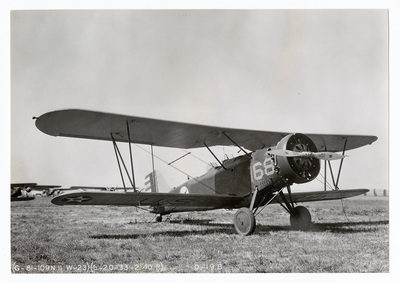
During the worst year of the Great Depression—1932—only about a hundred aircraft were sold in the entire United States. Consolidated survived because the Army continued ordering small batches of observation aircraft like the O-19.
These modest but reliable contracts preserved the company’s workforce at a time when nearly every other aircraft manufacturer was collapsing.
Without these reconnaissance aircraft, Consolidated might not have existed long enough to design the PBY Catalina or the B-24 Liberator.
From Observation to Patrol
As aviation matured, the nature of reconnaissance changed. Pilots were no longer asked only to observe battlefields. They were also required to:
-
photograph vast regions
-
map terrain with precision
-
scout coastlines for enemy ships and submarines
-
gather meteorological data
-
track movements across oceans and deserts
-
support artillery and naval operations
These new requirements naturally pushed Consolidated toward aircraft with greater range and endurance. The transition led to designs such as:
-
the P2Y Ranger
-
the XP3Y
-
and ultimately, the PBY Catalina
Though remembered today as a flying boat, the Catalina was fundamentally a long-range reconnaissance platform.
Note on Observation Aircraft Classification
By the mid-1930s, the U.S. Army Air Corps began phasing out the formal “Observation” category.
Observation duties were absorbed into broader mission types such as reconnaissance, patrol, photographic mapping, and eventually maritime patrol.
Because of this shift, Consolidated did not produce a later generation of O-series observation aircraft.
Instead, the company’s reconnaissance lineage continued through aircraft like the P2Y Ranger, the PBY Catalina, and long-range patrol variants of the B-24 Liberator.
Engineering Influence on Later Designs
Reconnaissance development directly contributed to:
-
the long-endurance stability of Consolidated’s flying boats
-
aerodynamic refinements in the Catalina
-
cockpit visibility improvements
-
strengthened airframes for extended missions
-
the long-range patrol philosophy that shaped both the Liberator and Privateer
These early reconnaissance efforts laid the groundwork for Consolidated’s greatest accomplishments.
Legacy of Consolidated’s Reconnaissance Work
Consolidated’s reconnaissance programs were not designed for fame, but for clarity. They provided commanders with the information they needed—and gave Consolidated the engineering maturity to build aircraft that would serve across oceans and continents.
Reconnaissance development taught the company how to build aircraft that could endure, see, and return.
That understated skill would become the foundation for some of the most significant aircraft of the twentieth century.