

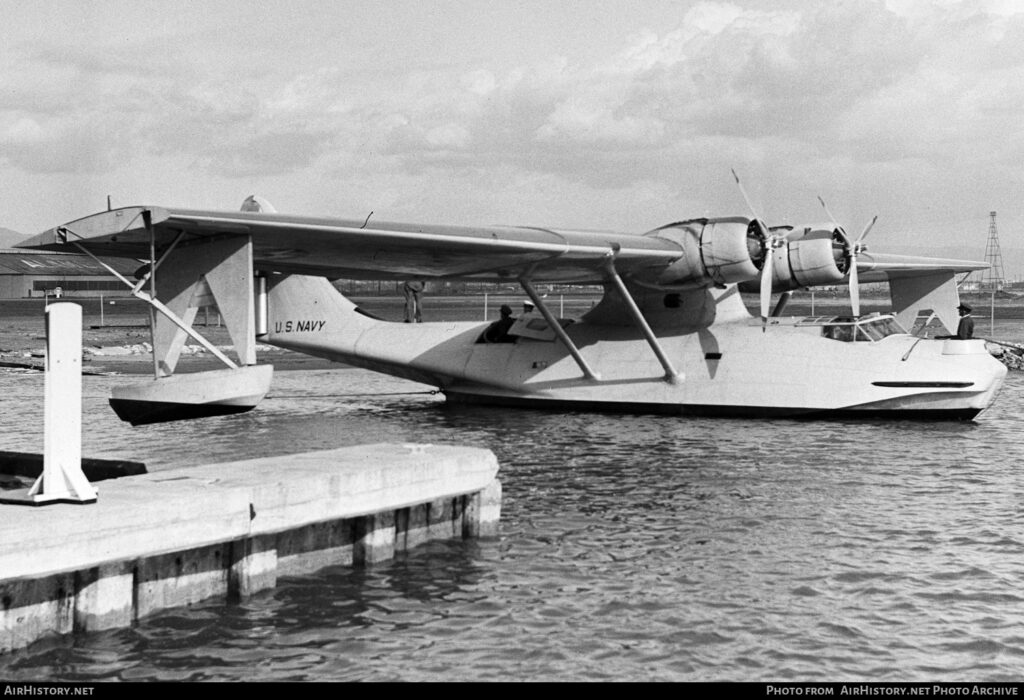
XP3Y / P3Y Prototype
The Direct Path to the Catalina
The XP3Y, later designated P3Y, was the critical turning point in Consolidated’s flying-boat lineage—the moment when long-range patrol aviation moved from refinement to transformation. Where earlier aircraft proved the concept, the XP3Y redefined what a maritime patrol flying boat could be.
Designed in the mid-1930s, the XP3Y incorporated everything Consolidated had learned from the XPY-1 Admiral and the P2Y Ranger, while addressing their limitations in range, payload, and overall performance. The result was not simply an improved patrol aircraft, but the prototype of a new standard.
A New Design Philosophy
The XP3Y was conceived with a clear mandate: greater range, improved seaworthiness, and increased operational flexibility. To achieve this, Consolidated introduced a number of decisive design changes:
-
a more refined and hydrodynamically efficient hull
-
improved wing structure and lift characteristics
-
greater internal fuel capacity for extended patrols
-
enhanced crew accommodations for long-duration missions
-
provisions for heavier equipment and armament
These changes reflected a maturing understanding of how flying boats would actually be used in service—not as experimental platforms, but as primary instruments of naval reconnaissance.
From Prototype to Production
The prototype XP3Y demonstrated performance that exceeded expectations. Its success prompted rapid Navy interest, and the design was ordered into production with incremental refinements. With those refinements came a new designation—and a new name.
The P3Y became the PBY Catalina.
This transition was not a radical redesign, but a confirmation that the core XP3Y concept was sound. The aircraft that would become famous across the world was already present in the prototype’s fundamental shape, proportions, and capabilities.
Why the XP3Y Mattered
The importance of the XP3Y lies in its timing. It arrived just as global tensions were rising and the strategic value of long-range maritime patrol was becoming unmistakable. The aircraft offered:
-
true ocean-spanning endurance
-
operational reliability from water bases
-
adaptability for patrol, bombing, and rescue roles
It was exactly the aircraft the Navy needed—just in time.
Legacy
Though the XP3Y itself was only a prototype, its legacy is immense. It stands as the direct ancestor of one of the most successful flying boats in history, and as the design moment when Consolidated’s vision fully aligned with operational reality.
Everything that made the PBY Catalina legendary began here—with the XP3Y, the aircraft that bridged ambition and achievement.