
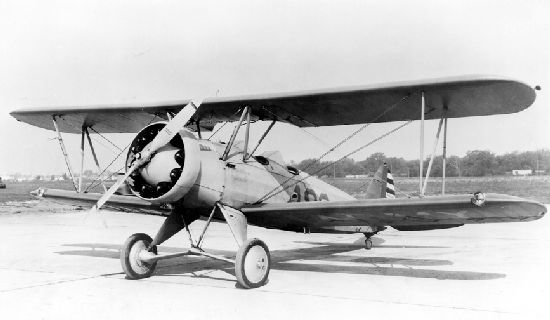
PT-11 “Husky”
A Transitional Trainer for a New Era of Army Aviation
Introduction
The Consolidated PT-11, known by its company name “Husky,” represented the next evolutionary step in Army primary trainers after the PT-1 and PT-3. Developed in the early 1930s, the PT-11 incorporated aerodynamic refinements, structural improvements, and engine upgrades intended to create a safer, more reliable platform for new pilots entering an aviation landscape that was rapidly modernizing.
Although it never reached the production numbers of the PT-1 or PT-3, the PT-11 program (including all its variants) played a key role in advancing Consolidated’s engineering capabilities during the interwar period.
Why the PT-11 Was Developed
By 1929–1930, the U.S. Army Air Corps needed a new trainer that could:
-
generate more stable handling characteristics
-
support more powerful and reliable powerplants
-
address structural lessons learned from earlier trainers
-
prepare pilots for faster, heavier, and more advanced aircraft
The PT-3 had served the Army well, but aviation technology was moving quickly. Consolidated responded with a series of experimental and pre-production prototypes that became the PT-11 family.
Design Characteristics
The PT-11 retained the general two-seat, tandem-cockpit layout of earlier trainers but incorporated several advancements:
-
strengthened fuselage and wing structures
-
cleaner aerodynamic lines for improved efficiency
-
revised landing gear geometry
-
improved pilot visibility
-
compatibility with multiple engine types depending on the variant
Each experimental change helped the Air Corps refine its training requirements for the coming decade.
Variants of the PT-11 “Husky”
The PT-11 was not a single aircraft but a family of testbeds, each representing incremental improvements.
PT-11 (Prototype)
-
Initial prototype delivered for evaluation
-
Powered by the 170–200 hp range engines depending on testing phase
-
Served primarily as a stability and handling test platform
PT-11A
-
Featured structural modifications and control-surface refinements
-
Improved longitudinal stability
-
Introduced aerodynamic fairings and minor wing changes
PT-11B
-
Continued refinement of the airframe
-
Enhanced engine reliability and cooling
-
Strengthened components for higher load tolerance
PT-11C
-
Uprated powerplant
-
Additional improvements based on Air Corps test feedback
-
More robust flight characteristics for student pilots
PT-11D
-
Final and most advanced version of the Husky line
-
Incorporated all prior refinements plus further engine and systems improvements
-
Considered the peak evolution of Consolidated’s interwar primary trainers
While none of the PT-11 models were produced in mass quantities, the continuous iteration process strengthened Consolidated’s engineering expertise and directly informed later designs.
The PT-11’s Role in Pilot Training
Though never as widely deployed as the PT-1 “Trusty” or PT-3, the PT-11 served an important function:
-
refining the Army’s expectations for a next-generation trainer
-
testing new structural and aerodynamic concepts
-
giving engineers and test pilots a platform to evaluate performance under varied conditions
-
contributing design lessons that would flow into later aircraft across multiple categories
The PT-11 represented Consolidated’s commitment to constant improvement—even between major production contracts.
Legacy of the “Husky”
The PT-11 marks a transitional moment in military training aircraft:
-
bridging the gap between wood-and-fabric biplanes and the more sophisticated trainers that appeared in the mid-1930s
-
demonstrating Consolidated’s ability to experiment rapidly
-
influencing the training philosophies that shaped pre-WWII pilot instruction
Though overshadowed by the more famous PT-1 and PT-3, the PT-11 “Husky” remains an important part of Consolidated’s developmental history.
Explore More Training Aircraft
Return to the Hangar to view additional aircraft categories:
-
PT-1 “Trusty”
-
PT-3
-
Other Training Aircraft