
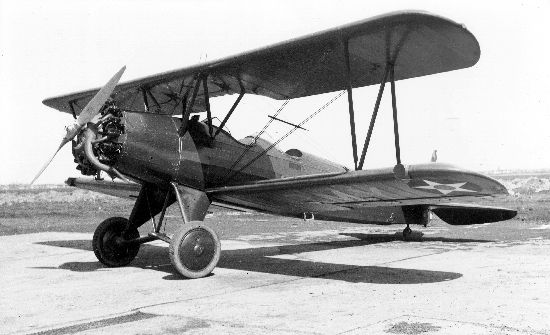
PT-3 “Trusty” (Primary Trainer)
Refining the American Training Aircraft of the 1920s
The PT-3, an evolution of the PT-1 “Trusty,” became one of Consolidated’s most recognizable contributions to U.S. military flight training. Entering service in the late 1920s, the PT-3 trained thousands of Army Air Corps pilots and became a familiar sight at airfields across the country.
Design Improvements Over the PT-1
While the PT-1 established the basic trainer configuration, the PT-3 introduced substantial upgrades:
-
a more powerful radial engine
-
structural strengthening in wings and fuselage
-
improved control responsiveness
-
better cooling and reliability
-
refinements for easier maintenance in the field
These changes made the PT-3 sturdier, more forgiving, and better suited to the increasingly demanding training programs of the era.
Operational Use
The PT-3 served as a front-line primary trainer for:
-
novice cadets entering the Air Corps
-
reserve units
-
pilot schools preparing aviators for advanced trainers and pursuit aircraft
Its stable, predictable flight characteristics made it ideal for student instruction, while its rugged construction tolerated the inevitable mistakes of early trainees.
Engineering Philosophy
Consolidated sought to create a trainer that could:
-
withstand repeated hard landings
-
minimize stall-spin risks
-
remain economical to operate
-
support both basic and intermediate instruction
The PT-3 achieved this balance well enough that the Army Air Corps ordered significant quantities and standardized it as a major component of the training fleet.
Service Legacy
Although eventually replaced by more modern monoplanes, the PT-3 played a central role in shaping early American pilot training. Its influence extended beyond its service life by informing the design principles of future Consolidated models.
Many pilots who later flew in WWII began their flying careers in a PT-3, making it an essential link in the chain of American aviation development.